Ultrarunner Sophie Ranson empties her trail vest so you don't have to start from scratch. From all-weather essentials to race-day extras, here’s the gear that earns its place, and why.
23rd March 2026 | Words and pictures by Sophie Ranson
Welcome to what’s in my running vest – like Vogue’s ‘In The Bag’, but the trail edition. As a seasoned trail runner, having grown up chasing Scotland’s mountains and participating in ultra and trail events across the world, I’ve learned a thing or two when it comes to running vest non-negotiables – plus a few helpful hacks, too.
Assuming I’m already wearing a running cap and sunglasses (hello UPF protection), I’ll start unpacking the essentials before diving into variations for long-distance running, racing and nice-to-haves. On y va!
A pause in the Cairngorm pines – vest packed, cap on, sunnies at the ready. What more do you need?
L'essentiel
First up: my go-tos for any run…
Basic first aid (plasters)
When I wear my running vest, it usually means I’m heading somewhere remote – on a trail or up a mountain – so carrying a small first aid kit is a must. It mostly remains tucked away, never seeing the light of day, but I’ve been thankful to have it in the few instances when something has happened.
You can pick one up at most outdoor shops, but at the very least, make sure to take the following:
antiseptic wipes
bandages
plasters (normal and for blisters)
emergency blanket
Snacks
Perhaps my favourite essential: food. Your distance will determine the amount of fuel you take, but I prefer to overpack than underpack. From sudden adverse mountain conditions to getting lost, the unpredictability of trail running means you never want to be caught out hungry. For runs lasting longer than 60-90 minutes, aim for 30-60 grams of carbs per hour. ‘Hitting the wall’ is almost always a nutrition issue, so don’t be shy.
Consult a nutritionist or running coach to find a fuel plan that works for you, but don’t forget to bring food that brings joy, too. For mountain adventures, you can bet I’ll be bringing tasty treats to eat at the peak (shoutout to KJ’s Bothy Bakery cardamom and cinnamon buns: an essential in my books).
Lip balm
Easily forgotten but sorely missed – literally. High elevation often translates to chapped lips, but this could also signal dehydration, which leads me to the next essential…
Water
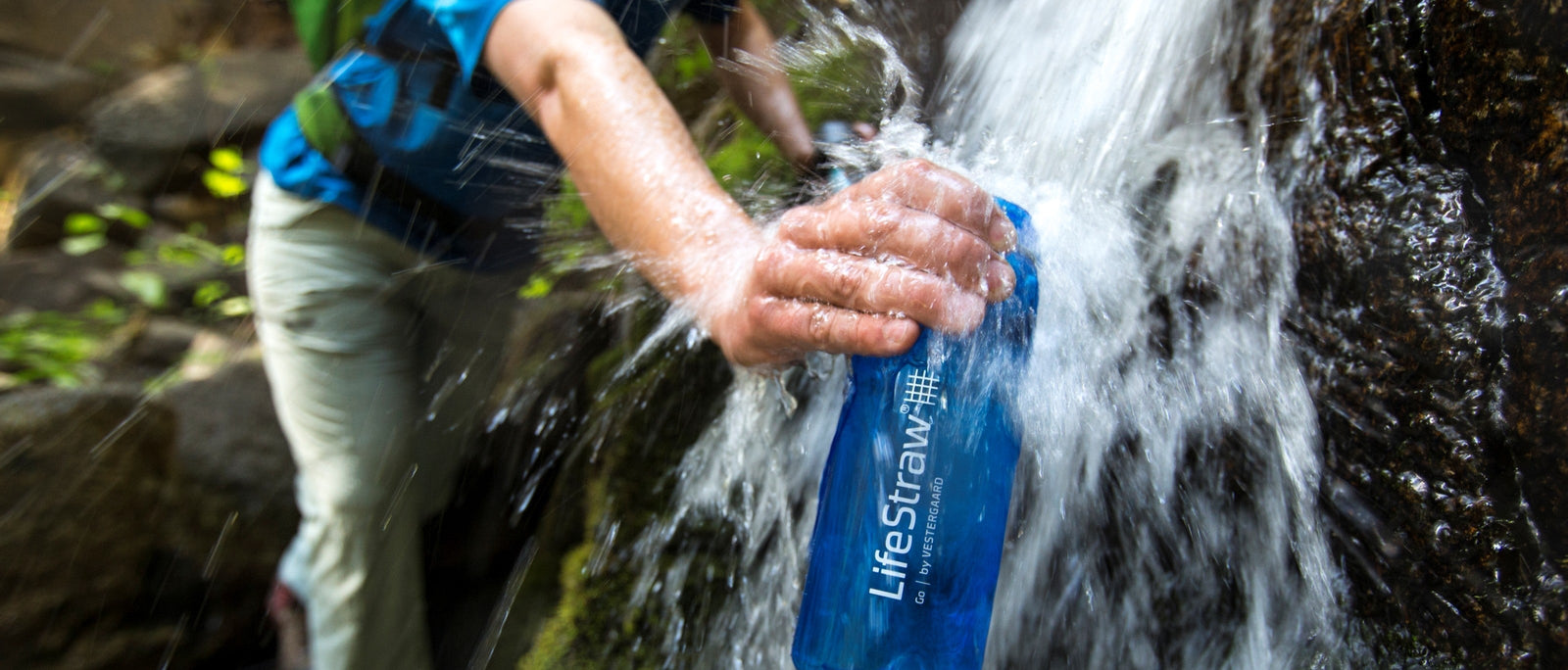
For any runs longer than 4+ miles (give or take) and always on new routes: water. Whether it’s one or two 250ml flasks depends on the distance and the season. In warmer weather and/or high elevation, it’s always two, or even three – with an extra flask kept in the back pocket – to help prevent heat exhaustion and dehydration.
All hail the BUFF– multi-purpose neck gaiter, face covering and Scottish weather survival tool.
BUFF
Long live the BUFF. It’s your most lightweight, yet versatile piece of running kit. Neck gaiter? Face covering? Hat? Wristband? Impromptu bandage? It does it all. Plus, it’s quick-drying and compact. Some specialized versions also offer UPF protection and evaporative cooling.
Spare layer(s)
The amount of layers I bring depends on the time of year, but I usually take a long-sleeve base layer and a light spare/waterproof jacket. This is particularly important for mountain runs – no matter what time of year. You never quite know when the weather will turn, particularly in more temperate climates (shoutout unpredictable Scottish weather). At elevation, you cool down fast: taking in the views on a mountain peak is all fun and games until a chill hits.
A lone running glove on a granite boulder – somewhere on a Scottish mountain, doing its best.
Gloves
Beyond comfort, gloves keep my fingers nimble for lace tightening, map checking and – if I ever need it – making an emergency call. Just keep them safely stashed; the hills seem to be full of lone, lost gloves.
Bank card
Please don’t rob me. But yes, I’ll usually always take a credit or debit card. I don’t trust my phone to stay alive. Whether that’s for purchasing essentials, such as extra water or medical supplies, or a cheeky post-run flat white, I’m coming prepared.
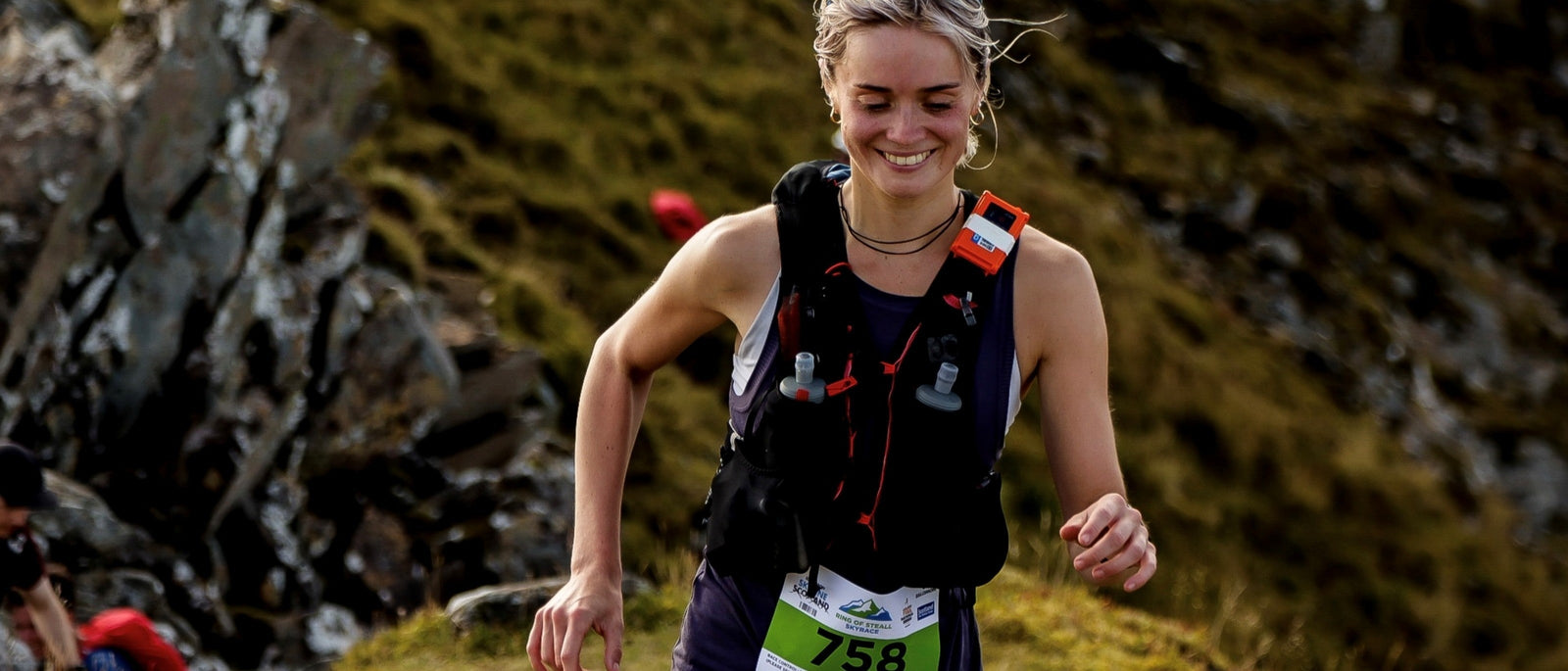
Mid-race during the Ring of Steall Skyrace, wearing number 758 and trying to smile through the suffer.
Extras (for the big ol’ long runs and races)
Extra distance and unique races sometimes call for a few extra supplies…
Headphones
Headphones make it out on most of my long runs, but I usually refrain from plugging in until I’m at least halfway, or for when the going gets really tough.
When it comes to picking a pair of headphones, ideally you’re looking for a secure fit, long battery life, decent sound quality and either on-board music storage or the ability to sync to playlists on your smartwatch/phone.
Bone conduction headphones are a great choice as they don’t block out race marshals’ instructions or cheering spectators. If you’re an iPhone user, wired EarPods are much less likely to get lost than wireless AirPods…
Spare socks
I never thought I would look at someone with resentment over a pair of fresh socks – until I started trail running and racing ultras. While I usually embrace wet and muddy feet on the trails, this is less than ideal for longer distances.
Changing into a fresh pair of socks boosts comfort, avoids blisters and can even offer a small psychological boost, making you lighter, readier for the trails ahead.
Skyrace flat lay: trail shoes, running gaiters, waterproof shell, sunglasses, poles, head torch, energy bars and gels, vest, shorts, hat and BUFF, old but trusty Garmin watch, race number, vest with whistle, soft flasks and tracker – everything earns its place.
Electronics – power bank and charging cable
I love my Garmin, but it’s almost a decade old. Until I decide to upgrade it, I take some sort of charging pack or portable power bank with me on my long and high runs (i.e. the really, really big ones, such as race day).
While my phone is usually on airplane mode, I’ll also take a charging cable for my phone, too. Again, it’s always better to be overprepared.
Top tip: place electronics such as these in a zip lock travel bag to keep them dry.
A different load-out for racing in the Alps, with a punchier Petzl head torch, gnarliest Salomon Speedcross shoes, extra Nakd bars and Clif Bars, plus suncream, insect repellent and GoPro.
Map and compass
Particularly important for the mountain runners: don’t rely on your phone for navigation. Having a map and compass with you, and knowing how to read it, will help keep you on track and safe in unexpected circumstances. In many races this is also mandatory kit.
If I don’t have these items, I’ll always download offline maps for mountain and new route explorations.
Head torch
Running in light: good. Running in dark: bad. Need I say more?
Superlight, folding carbon poles are virtually weightless, pack down small and make me feel like Legolas with a quiver of arrows at my back. Triple win!
Poles
Depending on the terrain, you might find yourself in need of a pair of running poles. Mine are carbon-fibre, so they’re an easy add-on that is virtually weightless – whether I’m carrying them or they’re folded away in my pack (folded up, I feel like an elf carrying a quiver of arrows. So, if that’s not a reason to pack them then I don’t know what is.)
Microspikes
Arguably an essential for winter running in places such as Scotland, with icy, snowy paths at every turn. Light and small, these easily fold into my open running vest pocket, ready for when the conditions call for them.
Just for fun
Because life’s fun when you add in some side quests. Here are a few ‘nice to haves’, depending on the season and social calendar…
The real post-run essentials: a flat white, a cinnamon bun, and Stanley Tucci for good measure.
Book
To add some variation into my training, sometimes I might route my run to a café and, if I’m feeling fancy, I’ll take a book. I like that it adds a little extra weight to my pack, like rucking: I tell myself this extra literary resistance will make me tougher… and that maybe I’ll assume Stanley Tucci’s culinary prowess through osmosis.
Change of clothes
An extremely seasonal luxury, saved mostly for summer when I know I won’t need a jacket. Sometimes, I’ll double up my training with travel to social events. This means getting out another zip lock bag to pack a change of clothes (e.g. dress) and light bathroom essentials, but only if I know there’s a shower waiting for me at my end point.
Sophie Ranson is a freelance writer and researcher with a specialist interest in environment, health and sports subjects. An experienced ultra runner, wild swimmer and yoga teacher, she splits her time between London and Scotland’s Cairngorms.