FRANCE: LIVRAISON GRATUITE À PARTIR DE 75 GBP & RETOURS GRATUITS

EXPÉDITION LE JOUR MÊME

Bordeaux by Bike: Tackling the Tour de Gironde

With a broken campervan and six days to kill, Alf Alderson races the arrival of autumn to ride the Tour de Gironde – a 480km loop through world-class wine country via rolling Atlantic coastline.

29th January 2025 | Words by Alf Alderson

The 480-kilometre Tour de Gironde is not known for its hills – in places it makes Lincolnshire look positively alpine. So, it was a pleasant surprise to find myself on the first day of said 'tour' at the top of a modest summit just south of Talmont-sur-Gironde, looking out over the spectacular vista of the Gironde Estuary.
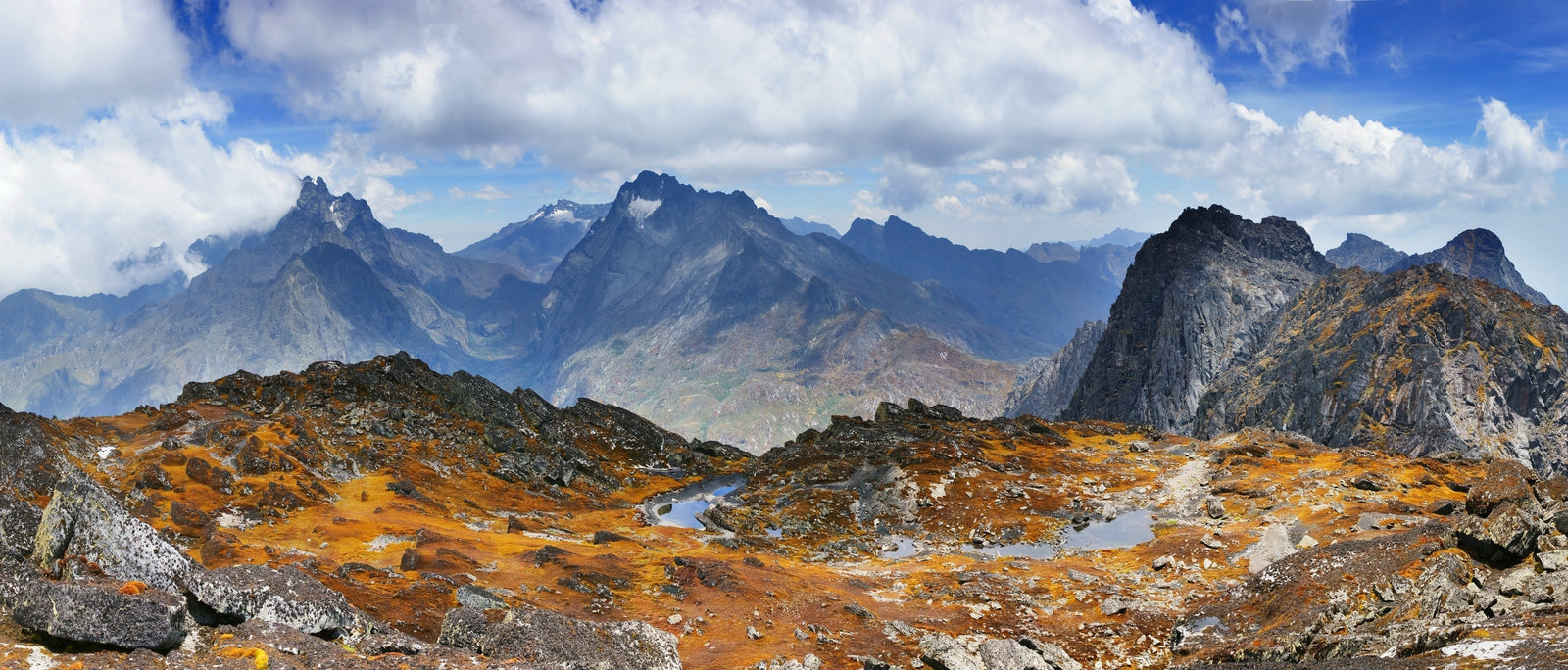
In contrast, since this is the biggest estuary in Europe, it was no surprise to see that the opposite bank of the mighty river was little more than a blurry outline over 10 kilometres distant. As I stood enjoying the view in the warm autumn sunshine, I suddenly heard a cheerful "Bonjour!" from over my shoulder, as I was joined by another cyclist coming from the opposite direction.

"Great view, hey?" (or words to that effect), he said in French, to which I agreed before hastily pointing out that my French was pretty merde. "No problem, I speak English," replied Frank (for that was his name). Frank then enquired where I was going.

"I'm riding the Tour de Gironde," I replied. "I started this morning in Royan". Royan is only about 20km to the north, so I'd obviously not been riding for long. Neither is it the 'official' start point for the ride – that's Bordeaux - but since it's a circuit you can start anywhere along the way.

I'd found myself in Royan with six days to kill whilst waiting for some work to be done on my ailing campervan. Having discovered the Tour de Gironde on the France Velo Tourisme website, and with a forecast of perfect autumn weather for the next few days, I decided to give it a go.

Geometric rows of bright green grapevines on rolling hillside stretching to horizon

The perfectly manicured vineyards of Bordeaux wine country provide the backdrop for the first days of riding


The entire route is waymarked, and around 310km of it is on traffic-free trails. It takes in the vineyards and chateaux of the Médoc, winds its way through Bordeaux and east onto the heathlands of Gascony. From there it veers west back to the Arcachon Basin and the sand dunes, forests and surf of the Atlantic coast. There are few hills of any consequence, so six easy 80-kilometre days would make for a relaxing way of winding down my bikepacking season (it was mid-October), before heading out to the Alps for the winter.

Carrelets, Coastline and an Unexpected Lunch Invitation

I left Royan under brilliant blue, albeit initially chilly skies, riding alongside the appealing sweep of sand and sea that makes up the 2.6km-long beach of Le Grande Conche. It was almost deserted at this time of year, and the slightly forlorn, even melancholic atmosphere this created was to become a feature of the ride, but not an altogether unpleasant one.

Weathered wooden carrelet fishing platform with small hut and net frame extending over grassy riverbank

Over 600 carrelets line both banks of the Gironde estuary, used to catch crayfish, prawns and smelts


This stretch of the Gironde shoreline is peppered with carrelets, an arrangement which consists of a wooden gangway leading out a few metres from the riverbank to a hut and frame, which holds a net suspended above the water. This is lowered to catch a variety of sea creatures including crayfish, prawns and smelts, and apparently there are well in excess of 600 of them along either bank of the Gironde estuary. It's a traditional type of fishing, though it isn't quite as ancient as it appears, dating back only as far as the early 20th century.

Traditional wooden carrelet fishing platform with nets suspended over sparkling water

Traditional carrelets – wooden fishing platforms suspended above the Gironde estuary – dot the shoreline, a fishing method dating back to the early 20th century


A combination of gravel cycle paths and undulating quiet country roads led me south, past huge sweeps of marshland passing up into rolling fields and vineyards and past the charming village of Talmont-sur-Gironde. Renowned as one of the prettiest villages in France, it looks like the kind of place Brigitte Bardot and Serge Gainsbourg would have flounced around in whilst smoking Gitanes in a 1960s French movie.

Romanesque church with ornate stone facade and rounded apse sitting atop weathered stone walls, touring bicycle with panniers parked in foreground against clear blue sky

The picturesque village of Talmont-sur-Gironde is renowned as one of the prettiest in France, perched above the estuary


But back to Frank. I was heading for Blaye, my planned stop for the night. When I informed Frank of this he offered to about turn and join/guide me along the way. I made the right decision in agreeing to his company, as he also took me back to his house for lunch where I met various members of his family and his energetic Belgian shepherd dog. After this welcome interlude he guided me along some lovely rolling, sunny off-road trails I'd never have discovered for myself, as we nattered away in 'Franglais' and set the world to rights.

Cyclist in blue jersey riding loaded touring bike along gravel cycle path with green vegetation on both sides

Well-graded gravel paths make up around 310km of the 480km Tour de Gironde route

We parted ways at the village of Braud, after which I eventually hit the Canal des Deux Mers cycle trail, which runs from the Atlantic to the Med (or vice-versa) and which took me through seemingly endless vineyards. I'd be seeing a lot of these over the next few days as I cycled through what is one of the world's most famous wine producing appellations to arrive in Blaye as the sun set in a deep-blue autumn sky.

Ferries, Fortifications and the Vineyards of Margaux

I awoke to the sun rising on another clear but chilly morning and found I had time to kill until I could take the ferry across the Gironde (bikes free!). Once on the west bank of the river, I'd cycle through the world-renowned Margaux wine producing area of the Medoc region, en route to Bordeaux.

Weathered stone gateway with arched entrance and cyclist visible through archway, part of fortified walls

Entering the 17th century citadel at Blaye, a UNESCO World Heritage Site overlooking the Gironde estuary


Killing time was easy enough to do in Blaye, since I was able to wander around the magnificent 17th century citadel that overlooks the estuary – it's a UNESCO World Heritage Site, which even a philistine like myself couldn't fail to appreciate.

By the time I'd taken the ferry across the Gironde and started riding, the early morning chill had dissipated to become perfect cycling weather – 23°C and not a breath of wind – as I wound my way between endless vineyards on deserted country roads.

Close-up of cluster of dark purple wine grapes hanging on vine with green leaves showing autumn coloration. Cluster of pale green white wine grapes hanging from vine surrounded by bright green grape leaves

The Tour de Gironde passes through some of the world's most famous wine-producing appellations, including the Médoc region


As I neared Bordeaux it was no surprise that traffic gradually increased, although this wasn't an issue. As in many parts of France, my route took me along separate cycle paths, which meant that other than regular halts at traffic lights, I was safely away from the road traffic.

I rode through the heart of Bordeaux, past an impressive array of classical and neo-classical architecture along the west bank of the Garonne river (the Gironde 'splits' into its feeder rivers of the Garonne and Dordogne just to the north of Bordeaux), sharing the route with pedestrians, cyclists, skateboarders and scooter riders. I enjoyed imbibing the cosmopolitan atmosphere of one of the world of viticulture's most iconic cities, before eventually crossing back over to the east bank and picking up the Roger Lapébie cycle trail, named after the 1937 Tour de France winner.

It follows an old railway line, so as with the earlier part of the day's riding, of hills there were none, although there was a very slight uphill incline for the final 14km of the day into the bustling town of Créon. At least this ensured I felt like I'd kind of earned my pizza that evening.

Medieval Squares, Wrong Turns and a Headless Bride

Autumn mist swirled around the streets of Créon as I made my way east out of town on the cycle track, and it wasn't until close to midday that the sun eventually burnt through. By this point I was on another cycle trail, the aforementioned Canal de Deux Mers – I'd ridden this section in the opposite direction a couple of years earlier on a ride from Bilbao to La Rochelle, and even ended up pulling over for a break at the very same bench me and my mate Mark had used for a lunch break on that ride.

Autumn tree-lined canal towpath with golden leaves reflected in still water beside the path

The Canal des Deux Mers cycle trail winds between endless vineyards, linking the Atlantic to the Mediterranean


Dramatic autumn sunlight filters through tall deciduous trees creating beams of light, with red and gold autumn foliage visible on the trunks

Late October sunshine cuts through the autumn mist along the canal towpaths of the Gironde


Yet again I found myself threading a route between vineyards stretching away to the far horizon, arriving in Sauveterre-de-Garonne and grabbing a coffee in its medieval town square before heading out – and getting lost – on the hilliest section of the entire ride, with a few short but quite stiff climbs to contend with.

Late October sunshine cuts through the autumn mist along the canal towpaths of the Gironde

Rolling farmland and quiet country roads characterise the terrain around Sauveterre-de-Garonne


Somehow, I'd managed to miss the signs for the route, which was quite an achievement given how frequent they were, and found myself riding along undulating backroads south-east of Sauveterre to the characterful medieval riverside town of Le Réole. Luckily, this was no big deal since the traffic was so light, and in some ways it was good to have to navigate for a change rather than simply following signs.

In Le Réole I crossed the Garonne yet again and turned west, heading towards the Atlantic coast some 140km distant. By now the terrain had flattened out once again, and a combination of canal towpaths and empty backroads took me on to the most atmospheric stop of the ride.

Weathered stone facade of medieval Gothic cathedral with three arched doorways, rose window, and twin towers under grey sky

The cathedral of Saint-Jean-Baptiste dominates Bazas' medieval town square, a UNESCO World Heritage Site on the Santiago de Compostela pilgrim route


Bazas had a delightful centre of narrow medieval streets and an impressive large square fronted by the cathedral of Saint-Jean-Baptiste, listed as a UNESCO World Heritage Site and situated on the Santiago de Compostela pilgrim route. I also scored accommodation at the 19th century Château de St. Vincent for the same price as I'd been paying for anonymous chain hotels, staying in a room for which the phrase 'shabby-chic' might have been invented, and sharing the place with a headless bride (it was actually a headless mannequin dressed in a bridal gown) who stared wistfully out of a downstairs window in a rather eerie fashion -- assuming it's possible to stare when you have no head. Bizarre...

Pale yellow 19th century French chateau with ornate architecture, balconies and turrets, surrounded by gardens

The atmospheric Château de St. Vincent in Bazas offered accommodation at budget hotel prices – complete with headless mannequin bride


Into the Zone: Straight, Flat and Strange

If one of the 'guests' at my chateau accommodation had been bizarre, I was soon to discover that so was much of the terrain of today's ride.

I soon warmed up as I bid goodbye to Bazas and its forlorn bride, the sun cutting through the early morning chill as I hit the cycle trail that would take me all the way to the placid blue waters of the Bassin d' Arcachon.

ong straight empty road stretching to horizon with white centre line, scrubland and scattered trees on either side under pale blue sky

Endless straight roads characterise the flat terrain through the Landes de Gascogne region


Never have I ridden on a route as straight or flat as the 70-odd kilometres that followed. It should have been boring, with little to see either side of the trail other than the pine trees of the largest man-made forest in Europe, or the flat scrubland where the trees had been felled, but the combination of warm sunshine and effortless navigation allowed me to 'get into the zone'.

A straight gravel cycle path stretches into the distance through dense pine forest, with green grass verges on either side under blue sky

The relentlessly straight, flat cycle paths through the Landes de Gascogne pine forests offer a meditative riding experience


Touring bicycle with black panniers leaning against wooden signpost reading "Col du Château d'eau Alt: 34m" on forest path

At 34 metres elevation, this tongue-in-cheek "col" marker highlights just how flat most of the Tour de Gironde really is

I rode at a steady pace for a number of hours, my mind drifting aimlessly from one thing to another but with a general feeling of wellbeing, and when I stopped for a picnic lunch beside the trail I realised that I wasn't the only one who felt this way.

As I sat on an old tree trunk eating my sandwich, I heard the sound of cheerful singing, which gradually got louder until suddenly a fellow bikepacker shot by me. "Bonjour!" he exclaimed before continuing with his singing, the sound fading slowly away to the west.

This was only the third long-distance cyclist I'd seen since setting off three days ago, and like me he seemed to be enjoying the slightly surreal experience of a solo bike ride across the endless flats of the Landes de Gascogne – why else would you be singing at the top of your voice?

Aerial view of turquoise water with exposed golden sandbanks and boats, showing tidal patterns of the Arcachon Basin

The placid blue waters and distinctive sandbanks of the Bassin d'Arcachon mark the transition from inland riding to the Atlantic coast


By mid-afternoon I emerged from the forests and joined the Eurovelo 1 cycle route at Biganos. Other than a short detour tomorrow, I'd stay on this trail for the rest of the ride, and if I'd had the time and money I could have ridden it all the way to my home in Pembrokeshire, since it essentially follows the coastline of western Europe for 10,650kms all the way from northern Norway to southern Portugal. One day, maybe...

After the solitude of the ride thus far, the hustle and bustle of the coastal section between Biganos and Andernos was a bit of a shock, but a pleasant one -- the warm evening of an Indian summer was descending on the coast and there was a feeling that the locals were making the most of one of the last warm, sunny days of the year as people promenaded and rode their bikes along the shoreline in the dusk.

Surf Breaks, Sunset and the Silence of an Empty Marina

Summer still hadn't given up when I woke the next morning – yes, there was the familiar chill and clear blue sky, but it soon warmed up as I cycled through the endless coastal pine forests north of Andernos.

To my left I could hear the white noise of waves. I was only a couple of hundred metres from the coast, but the thick tree cover made it impossible to see the sea. This late in the season there were few cyclists riding Eurovelo 1. In fact, the only real sign of people came at points where roads accessed the beach, where surfers were parked up and making the most of a small, clean swell.

Sandy coastal dunes with marram grass in foreground, blue ocean and exposed sandbanks visible in distance

Coastal dunes and pine forests flank the final stretch of the route along the Atlantic coastline


Some of the spots I recognised from my own surf trips to Les Landes over the years, none more so than Lacanau-Ocean where I at last was able to access the beach and enjoy a dip in the sea. The riding south of Lacanau-Ocean had been on some well-graded gravel but it got even better to the north, where the trail builders had designed not only plenty of bends to break up the monotony of long straight sections but even incorporated a number of low hills to add more interest.

My plan had been to overnight at Hourtin-Plage and then have a short final day to the Royan ferry at Pointe de Grave, but the only accommodation I could find was a few kilometres inland at Hourtin Marina. This was accessed by yet another arrow-straight cycle track up the east shore of Lac d'Hourtin-Carcans, which is the largest freshwater lake in France (56.67 square kilometres, with a maximum depth of 10m, since you ask).

Golden sunset over calm water with silhouettes of moored sailboats and yachts at low tide creating reflections on wet sand

Spectacular sunset at Hourtin Marina on Lac d'Hourtin-Carcans, France's largest freshwater lake


I arrived to another spectacular sunset, grabbed a hot shower, a beer and a pizza in that order, then hit the sack. It was a Saturday night and I reckon that in summer this place would be buzzing, but by now, mid-October, the buzz was reduced to little more than the sound of wavelets lapping against boat hulls.

A Final Swim and a Race Against the Weather

My final day of riding, and the forecast was for rain by the afternoon. Leaving Hourtin I cycled back to the coast on the D10 and onto yet more long, flat, cycle paths through the forest, which led me eventually to Montalivet les Bains and the first coffee of the day.

A few splodges of rain fell whilst I was stopped for lunch in the forest north of the marvellously named Le Gurp, but then the weather changed its mind and returned to dry but cloudy, so a little further on I took the opportunity to have the last swim of the trip at one of the few points where the cycle path went right down to the beach.

Not the best move, I realised when I got out of the water – I'd now be cutting it fine to make the mid-afternoon ferry to Royan (bikes free!). If I missed it, I'd be waiting a couple of hours for the next one.

Wide gravel cycle path beside Gironde estuary with salt marshes and water visible, grey sky above

The route follows the Gironde shoreline past traditional fishing platforms and sweeping marshlands


Two-story French country house with faded cream walls and pale blue shutters on multiple windows, terracotta tile roof, trees behind

Classic French architecture with distinctive blue shutters lines the quieter backroads of the Gironde countryside

So, it was full gas for the next 15km, and luckily, I made it -- because by the time the ferry had crossed the Gironde and I'd ridden around the bay to my campervan the rain was pouring and the wind was howling.

Rows of grapevines with red and yellow autumn foliage, dark stone chateau tower visible in background

Autumn colours transform the vineyards as the season turns, with historic château towers punctuating the landscape


Rows of grapevines with yellow autumn foliage in foreground, misty rural landscape with farm buildings and stone tower on distant hilltop

Morning mist rises over the vineyards near the Médoc, where château towers punctuate the gently rolling landscape


I couldn't have timed my six-day ride better. By the following day autumn had arrived with a bang, heavy showers and strong winds lashing the coast. I'd probably seen the Tour de Gironde more or less at its best, with the combination of easy riding, perfect autumn weather and empty trails making for a fine way to bring my bikepacking season to a close.

Touring bicycle with panniers parked on dock in front of large white Gironde passenger ferry

The free bike ferry across the Gironde from Blaye connects the route to the famous Margaux wine region


Alf Alderson is an award-winning journalist and author who has been writing about adventure travel for 25 years, with his work appearing in a wide range of newspapers, magazines and websites globally. He divides his time between the Pembrokeshire coast and Les Arcs in the French Alps.