Camp
  • Field Guide: Svaneti, Georgian Caucasus
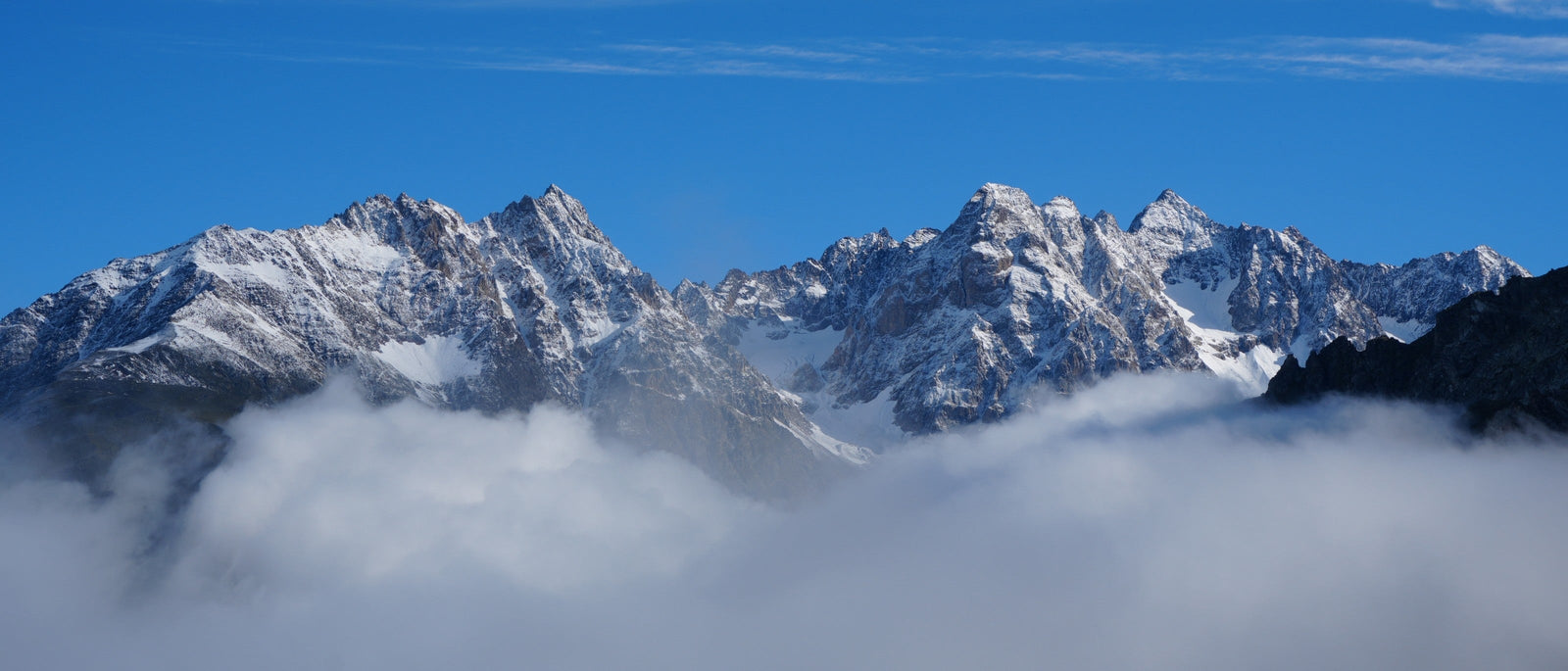
    Stone towers, shepherd’s tracks and the highest peak in Georgia: everything you need to plan a trip to Svaneti, the wildest corner of the Caucasus mountains.

    Snow-dusted Caucasus peaks in Svaneti rising above a sea of cloud inversion under a deep blue sky

    12th November 2026 | Words and Photos by Aila Taylor


    Crossing between Europe and Asia, the Caucasus mountains rise from lush green valleys into a harsh world of rock and ice. On the southern side of the range, Georgia’s mountainous region of Svaneti is a growing adventure destination. Medieval stone towers stand guard over villages, glaciers spill down from high peaks, and shepherd’s tracks wind through alpine meadows.

    As a UNESCO World Heritage Site known for its mountain scenery and rich history, Svaneti is an ideal destination for a blend of adventure and culture. The Svan language is a Kartvelian language distinct from Georgian, and the region has characteristic polyphonic singing, religious traditions and folklore. Hunters in the area used a form of ice axe called a mujra for both cutting steps in mountain ice and fighting animals, connecting local culture to mountain climbing. For the Svaneti Museum in Mestia, the General Director of the Georgian National Museum wrote that ‘it is difficult to find a context anywhere else in the world where nature and cultural heritage have been preserved so completely and merged so organically’. This is what sets Svaneti apart as an adventure destination: it offers not only endless opportunities to explore nature, but also a rich cultural heritage of language, art and cuisine.

    Romisghele Lake in Svaneti, Georgia, with the snow-streaked wall of Shkhara rising above an alpine meadow.

    Romisghele Lake, with Shkhara in the background.

    Don’t Miss

    The bustling town of Mestia serves as Svaneti’s central hub, with the greatest choice of hostels, restaurants and shops. It is a lively ski town that also serves as an excellent hiking base in summer.

    Further into the mountains, the medieval village of Ushguli has an entirely different character. Although it appears quiet on the outside, a range of bars, hostels and even an independent cinema can be found amongst its maze of cobbled streets. Standing in the shadow of Shkhara, Georgia’s highest mountain, Ushguli is a particularly good place to explore the ‘Svan towers’. These defensive dwellings were primarily built during the Georgian Golden Age, in the 11th–13th centuries, and it is still possible to climb all the way to the top of the tower on the hill overlooking the village today.

    Medieval Svan stone towers and slate-roofed houses in the village of Ushguli, Svaneti, with a glacial river in the foreground.

    Ushguli’s medieval Svan towers.

    Don’t miss the classic day hikes to Koruldi Lakes and the Chalaadi glacier, or the Hatsvali and Tetnuldi ski resorts in winter. For a cultural day out, the Svaneti Museum of History and Ethnography displays artefacts of local history, while the film Dede explores traditional life for Svanetians, based on true events. Dede can be viewed at the cinema in Mestia, but the best place to watch it is the cinema in a medieval house in Ushguli, the same village where it was set and filmed.

    How to Get There

    There is only one road going to Mestia and Ushguli suitable for cars. The road extends beyond Ushguli to form a circular route, but from here the road surface deteriorates – this section should be avoided after heavy rain and only attempted in a high-clearance 4x4. Alternatively, some people choose to bikepack the route over the mountain passes for an adventurous transport option.

    Driving yourself is the best option for flexibility, especially if staying in the smaller villages or accessing more remote trailheads. From Kutaisi to Mestia, the journey takes around 5 hours without stops. However, Georgian roads are not always easy to drive. Hazards such as rockfall, landslides, farm animals in the road, unpaved surfaces, and other drivers overtaking on blind bends mean that driving the mountain roads takes a bit of adaptation.

    For those that would prefer not to drive, there are regular marshrutkas going to Mestia and beyond. A marshrutka is a shared minibus commonly used for public transport in Georgia and other post-Soviet states. They often run on a fairly flexible schedule, and you can hail or request drop-offs mid-route depending on where you’d like to go.

    Kutaisi is the nearest international airport to Mestia, but Tbilisi is only an extra three hours via car or train and has the added benefit of direct flights from London.

    When To Go

    Summer is the most popular time for hiking in Svaneti, when most mountain passes become free of snow and a rainbow of wildflowers bloom across the alpine meadows. However, the area is also known as a premier destination for snow sports, with two ski resorts and endless possibilities for ski touring.

    Spring and autumn are generally quieter times to visit, although snow can limit some options in spring. Early autumn can be an ideal time for hiking, when the air is a little cooler than in the high heat of summer. The Caucasus mountains are ever-changing, while the region’s culture and history remain vibrant year-round.

    What to Do

    Hikers on the trail to the Shdugra waterfall near Mazeri, Svaneti, with wildflowers in the foreground and cascades above.

    The stunning Shdugra waterfall.

    Hiking

    The Koruldi Lake trail above Mestia is particularly popular for its mountain reflections, while Romisghele Lake near Ushguli is lesser-known but equally beautiful. It is possible to hike beyond both lakes for some easy ridge scrambles above 3,000m altitude.

    The Chalaadi glacier from Mestia and the Shkhara glacier from Ushguli are both easy hikes to get to the toe of each glacier, with local cabins serving fresh food and drink at each trailhead. Hiking to the Shdugra waterfall is a great wet weather option which becomes even more magical after rain. The hike to the waterfall starts at the Hiker’s Inn in Mazeri and winds through the pine forest, passing rustic log cabins tucked away in the trees serving drinks and snacks.

    Rustic log cabin café with a snack shelf, hammock and tree-stump seating among pine trees on a hiking trail in Svaneti.

    Trailside cabins selling snacks among the pines.

    One of the most popular treks in the area is the multi-day hike from Mestia to Ushguli, passing over mountain passes and through remote villages. It is 57 kilometres and is usually done in four days between June and October.

    Sticker-covered trail sign for the Shkhara Glacier at 2,557m with cloud-wreathed peaks behind, Svaneti, Georgia

    The sign to the Shkhara Glacier, 2,557m.

    Snowsports

    There are two main ski resorts in the area: Hatsvali Ski Resort, mixed into the pine forest near Mestia, and Tetnuldi Ski Resort, which is higher up on the lower slopes of Mount Tetnuldi. Beyond these, there are many options for ski touring and freeriding with several guiding companies operating in the area. There are also opportunities for snowshoeing and taking a 4x4 to Ushguli if road conditions allow. In February, you can experience the ancient Svan festival of Lamproba which includes chanting, feasting and communal bonfires.

    Mountaineering

    Local Svans have lived, hunted and travelled in the mountains around Mestia for centuries. International interest in the Caucasus grew as European alpinists looked further afield following the Golden Age of Alpinism, and several significant first ascents in Svaneti were made by English mountaineers.

    View from the summit of Laila Peak across layered blue ridges and glaciers of the Caucasus mountains in Svaneti.

    The view from the top of Laila Peak

    Some of the most popular peaks in the area include Laila, Tetnuldi, Ushba, Chatyn Tau and Shkhara. Laila is a fairly accessible climb at the European alpine grade PD, while routes such as the North Face of Chatyn Tau reach ED+. The white pyramid of Tetnuldi is known for its distinctive shape, and the double-peaked silhouette of Ushba is regularly photographed as the ‘Matterhorn of the Caucasus’.

    Crevassed icefall of the Tetnuldi glacier with exposed rock bands, glowing in early morning light in Svaneti.

    The Tetnuldi glacier.

    Guidebooks and route descriptions often require translating from Russian and are frequently outdated. Climate change is altering the Caucasus rapidly: falling rocks, receding glaciers and changing snowlines mean routes can present very differently to how they were recorded a few decades ago. The route up the South-West ridge across Tetnuldi, for example, used to be a fairly straightforward march up the glacier. However, glacial recession means that a band of rock cliffs has become exposed in the middle of the icefall. Currently, it is often still possible to climb around this up a steep ice slope, but in a few years it is likely to require a multi-pitch rock climb on loose and unstable rock. Grades often reflect the difficulty of the mountain at the time that they were climbed, rather than their difficulty in the present-day.

    Mountaineers will find that the Caucasus present additional challenges to those found in the Alps. Limited infrastructure means that updated information is hard to come by, paths can be hard to follow or non-existent, and a lack of mountain huts means you must be largely self-sufficient. For those that relish the challenge, mountaineering in the Caucasus provides access to extensive wilderness pine forests, sweeping glaciers and formidable ridges.

    Mountaineer with ice axe, rope and helmet strapped to their pack looking out over a glacier and green alpine valley in the Caucasus.

    Self-sufficiency is part of the deal in the Caucasus.

    Other Adventure Sports

    Horse riding is especially popular in Svaneti, and many of the classic hikes can also be done on horse with a variety of local tour providers. Mountain biking and paragliding are also available with local guides, and there are a few sport climbing crags such as those near the Chalaadi glacier.

    Saddled horse grazing beside a stream on the ride to Romisghele Lake, with Shkhara’s glaciated face behind, Svaneti.

    Horse riding to Romisghele Lake.

    Flora and Fauna

    The limited industrial development in the Caucasus region, along with its warm and wet summer climate, supports an impressive range of flora and fauna. Lower valleys become sprinkled with spring blossoms in April and May, while the alpine meadows are still bedecked in wildflowers in late summer. Even at 3,000m in September, I found carpets of bright pink bistort, yellow scabious, and the purple frills of mountain cornflowers.

    Hikers on a flower-lined path through the lush green valley above Mazeri, Svaneti, below the Ushba glacier.

    The lush green valley above Mazeri, below the Ushba glacier.

    Hidden amidst the maze of uninhabited valleys and tall peaks, there are brown bears, lynx, wolves, and wild horses. The West Caucasian tur is an endangered mountain goat endemic to the region, covering an area of around 4,500 square kilometres. It is extremely rare to receive a glimpse of these elusive mammals, but being conscious of their presence adds to the vibrant, expansive feeling of Svaneti.

    Where to Stay

    There are a wide range of hotels, hostels and campsites to stay in. For example, the Ecohouse Svaneti is a small, family-run farm close to Mestia with a choice of colourful rooms, wooden balconies, and even an alpine-style wooden chalet to stay in.

    Wooden alpine-style chalet with a balcony in an orchard at EcoHouse Svaneti, a family-run farm stay near Mestia.

    The chalet at EcoHouse Svaneti.

    In Mazeri, the Hiker’s Inn offers rustic wooden cabins tucked away in the woods, including a sauna, an alpine lake to swim in, and the opportunity to catch your own fish from the pond that the restaurant will then cook for you.

    In Ushguli, the XII Century guesthouse has cosy wooden-panelled rooms with warm lighting, and a lush green garden with hammocks and swing seats. For those looking for more privacy, Ushguli Cabins offer individual wooden cabins on a small hill in the heart of the village with views towards Shkhara, the highest mountain in Georgia.

    Stone guesthouse with a veranda and drying hiking kit, set below medieval Svan towers in Ushguli, Svaneti.

    The XII Century guesthouse in Ushguli.

    In addition to the wide range of guesthouses, car camping and wild camping are widely accessible in Georgia without restrictions. These options can be especially helpful before an early alpine start, and park-up spots are easy to find.

    Where to Eat and Drink

    Local, family-run restaurants and cafes are plentiful in Svaneti. Most serve local foods such as Svanetian khachapuri (flatbread with a cheese and green-onion filling), kubdari (Svanetian meat pie), and tashmijabi (cheesy mashed potatoes). In addition to a range of meat dishes, there are many vegetarian dishes such as ajapsandali (a vegetable stew) and badrijani nigvzit (walnut and aubergine rolls). Many dishes are flavoured with Svan salt, a distinctive salt blend with added spices, which can also be bought at local guesthouses.

    Tattered Georgian and European Union flags flying against a blue sky above forested hills in Mestia, Svaneti.

    Georgian and EU flags in Mestia.

    In Mestia, Cafe Laila is popular for its cosy atmosphere and arty decorations. The staff wear T-shirts stating baldly that ‘20% of my country is occupied by Russia’, while the Wi-Fi password is ‘Abkhazia is Georgia’. The geopolitical context of the region is impossible to ignore. Erti Kava is known for its specialty coffee, while Coffee Kor has a relaxing terrace with hammocks and swing seats overlooking the town square. In Ushguli there are a range of local restaurants tucked away in the cobbled streets, each with its own unique atmosphere – for example, Cafe Murkvam feels like a medieval tavern with old books and a stone fireplace decorated in carvings. Many of the hiking trailheads have wooden cabins serving food and drink, such as at the start of the walk to the Chalaadi glacier and the Shkhara glacier. Svanetian hospitality is evident in every valley, village and town, so refreshments are never hard to come by.

    Bunch of wildflowers in a glass on a rough wooden table outside a log cabin café in the pine forest, Svaneti.

    Tables to eat at in the woods.

    Whether you come for the medieval villages, wildflower-filled meadows or the challenge of climbing some of the Caucasus’ most formidable peaks, Svaneti offers a glimpse into a world where mountain life remains deeply woven into local culture. It is a place that rewards curiosity and self-sufficiency, where ancient traditions sit alongside an ever-changing alpine landscape. For those wanting to venture beyond the familiar trails of the Alps, Svaneti offers an opportunity to discover a wilder side of Europe where there is still plenty left to explore.


    Aila (formerly Anna) Taylor is an outdoor writer and mountain activist. She has previously published in the Guardian, The Independent, Vice and i-D magazines, amongst others. As an avid caver, hiker and cold-water swimmer, Aila is passionate about improving accessibility to the outdoors in addition to spreading awareness about the threats currently facing mountain regions.

    Instagram Website


    Voir l'article entier

    Hiker descending a rugged ridge of golden eroded cliffs above the Mediterranean near Pissouri, Cyprus.
    Field Guide: Cyprus

    Cyprus is far more than a beach break. Discover the best hiking in Cyprus, from Troodos waterfalls and Byzantine churches to wild Mediterranean coastal paths.

    Snow-streaked peaks of the Dachstein massif rising above dense spruce forest, Filzmoos, Austria
    Guide pratique : Filzmoos et le massif du Dachstein, Autriche

    Si vous avez envie de partir à la découverte des Alpes calcaires du Nord en Autriche, la pittoresque ville de Filzmoos constitue un excellent point de départ pour les nombreux sentiers facilement accessibles qui sillonnent le massif du Dachstein.

    Sunset on Bamburgh Castle, on the Northumberland coast of North East England.
    Guide pratique : Northumberland

    Des châteaux battus par les tempêtes aux remparts romains, en passant par de vastes forêts aux ciels sombres et un littoral regorgeant d'animaux sauvages, le Northumberland est le comté le plus merveilleusement méconnu d'Angleterre.